ISOmDB LIMS PRO
Automate Master Data Management in LIMS Environments
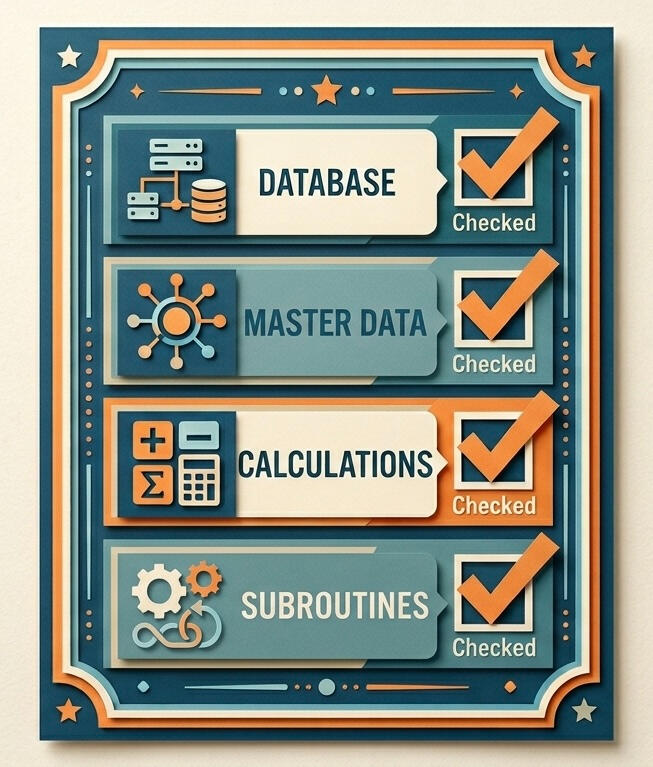
In Master Data Management (MDM) for laboratory environments, the ISOmDB LIMS PRO Master Data Snapshot Utility serves as a tool for creating immutable artifacts of system configuration and core data entities. By capturing hundreds of master data tables and source code routines in a vendor-independent format, it allows you to treat data as code, facilitating several key MDM best practices.
Change Management & Version Control
One of the primary best practices is implementing a structured Change Management Process.Version-Controlled Snapshots: Use the utility to capture a snapshot before and after any configuration change. This provides a fully auditable trail of "before" and "after" states.Rollback Baseline: If a new test method or material code configuration causes errors, these snapshots act as a baseline to identify exactly which records were altered, aiding in a manual or automated rollback.
Environment Synchronization (Dev/Test/Prod)
MDM relies on consistency across the application lifecycle. Environment drift, where staging and production databases slowly fall out of sync, is a common failure point.
Catching Sync Issues: Use the utility to compare snapshots of your TEST and PROD environments. This ensures that the master data (such as sample types, instruments, and locations) is aligned before a release deployment.
Deployment Verification: After migrating master data from development to production, run a comparison to verify that 100% of the intended records were transferred correctly without manual reconciliation effort.
Data Governance & Auditing
Effective governance requires regular audits to verify accuracy and compliance with standards like 21 CFR Part 11.Automated Verification: Rather than manual row-by-row checks, use the utility to perform a scan of thousands of files in minutes. This provides a high-speed method to verify that naming conventions and data standards are being maintained across all sites.Immutable Audit Trail: Store snapshots as part of your permanent compliance record to prove the state of the system’s master data at any specific historical point-in-time.
Data Migration & Harmonization
During system migrations or mergers, master data must be harmonized and cleansed.Vendor Independence: Because ISOmDB creates vendor-independent files (e.g., comparing Oracle to PostgreSQL), you can use it to map and compare data structures between different legacy systems and your new LIMS target.Merging Source Code: Use the comparison engine to identify common or duplicative subroutines before they are imported into a new environment. Merging the source code is made much more efficient by using ISOmDB to compare a pending release database, staged in MS Access or PostgreSQL with target databases, typically built on Oracle or MS SQL Server DBMS.
ISOmDB
copyright 2026 isomdb